More Chinese Regions to Require Autumn and Spring School Breaks
More Chinese regions are implementing autumn and spring breaks in compulsory education, expanding a decadelong national initiative. Some have also waived fees for students on break and rolled out support measures to help parents take leave at the same time as their children.
Spring and autumn holidays across all compulsory education schools have been rolled out provincewide in at least 15 provinces, as well as numerous cities in other provinces, such as the southern megacity of Shenzhen, domestic media reported last week. In China, compulsory education lasts nine years, encompassing primary and middle school. Breaks will occur in November and April for four to five days each.
The reform dates back to 2004, when Hangzhou, capital of the eastern province of Zhejiang, piloted the breaks. In 2013, the initiative expanded nationally when the State Council issued an announcement encouraging local governments to adopt it, and the rollout accelerated again in 2025 when central authorities urged more schools to implement the holidays.
Chu Zhaohui, a researcher at the China National Academy of Educational Sciences, told domestic media outlet Red Star News that the holidays actually boost learning.
“Learning isn’t confined to schools or taught only by teachers and parents,” Chu said, adding that the holidays give students space for self-exploration.
At the same time as introducing spring and autumn holiday policies, many cities have also added supporting measures so parents can sync their leave. In October, Longnan city in the northwestern Gansu province encouraged employers to implement paid leave and prioritize compensatory rest for employees with school-age children, aligning staff leave with school holidays.
Foshan, a city in the southern Guangdong province, also issued a proposal on Nov. 3 calling on employers to prioritize arranging leave for employees with children during the autumn holiday. The city’s five-day autumn break begins Nov. 11.
Many tourist spots are also waiving entrance fees for children during the upcoming fall break. In the eastern city of Wuxi, a theme park dropped entry fees for students 16 and under throughout November; 15 top tourism sites in Huangshan in the eastern Anhui province, a city known for its mountain of the same name, are now entry-free for children under 18; and the Dujiangyan scenic area in the southwestern Sichuan province waived fees for primary and middle school students between Nov. 12 and 16.
The breaks have significantly boosted travel demand, according to online travel booking platform Qunar. Data from Qunar revealed that in November, air ticket bookings for children 12 and under increased 1.6 times year on year, while parent bookings rose by 50%.
Wang Qiyan, director of the Leisure Economy Research Center at Renmin University, told Red Star News that spring and autumn breaks “enable off-peak travel, avoiding the packed scenic spots of winter and summer vacations.
Editor: Marianne Gunnarsson.
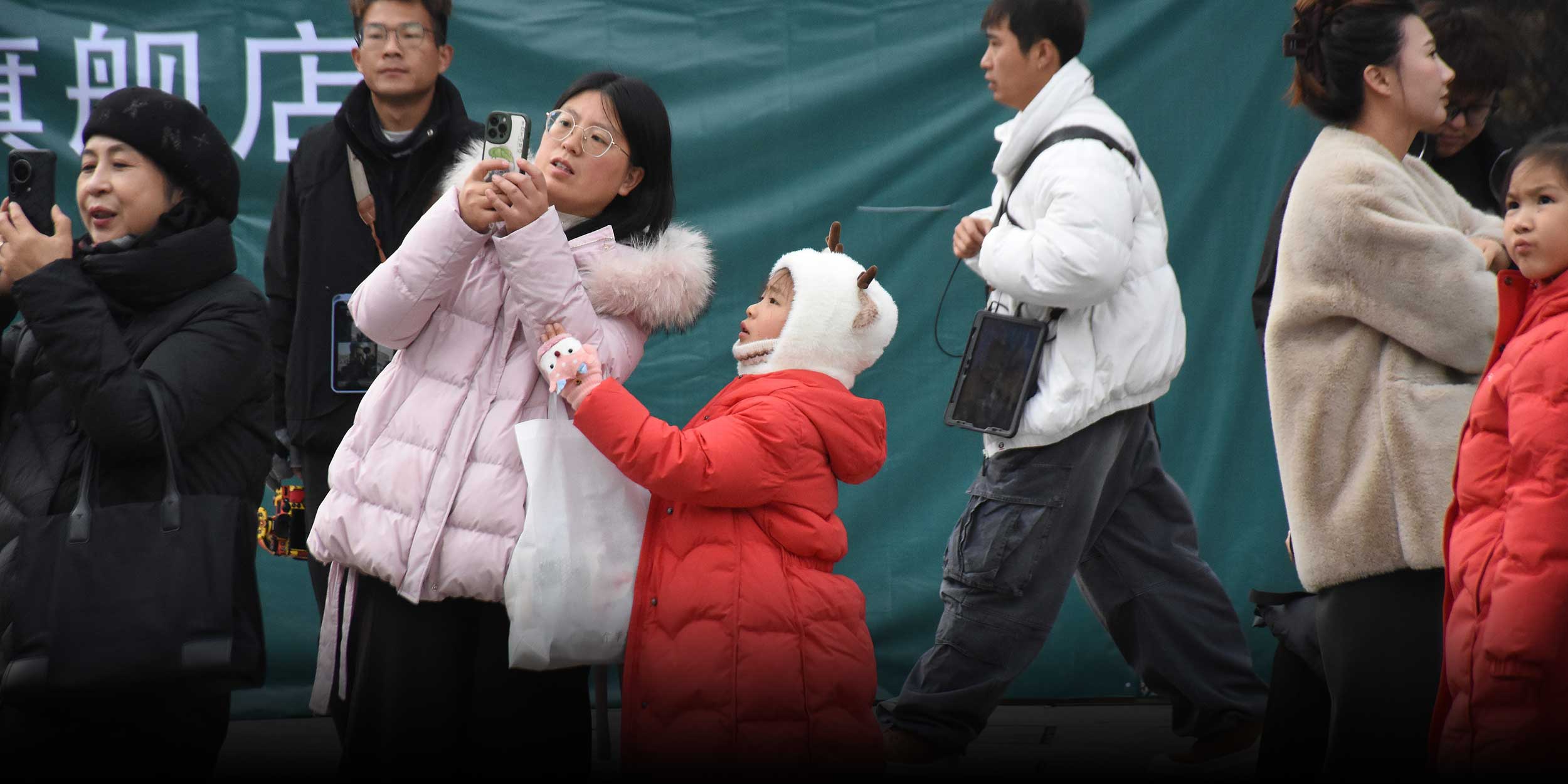
(Header image: Tourists take photos of St. Sophia Square during the autumn break in Harbin, Heilongjiang province, Nov. 4, 2026. VCG)